NNPC Seeks Investors for $26B Gas Pipeline to Morocco and Europe
9 Nov 2026 · Morocco · LNG
Read the analysis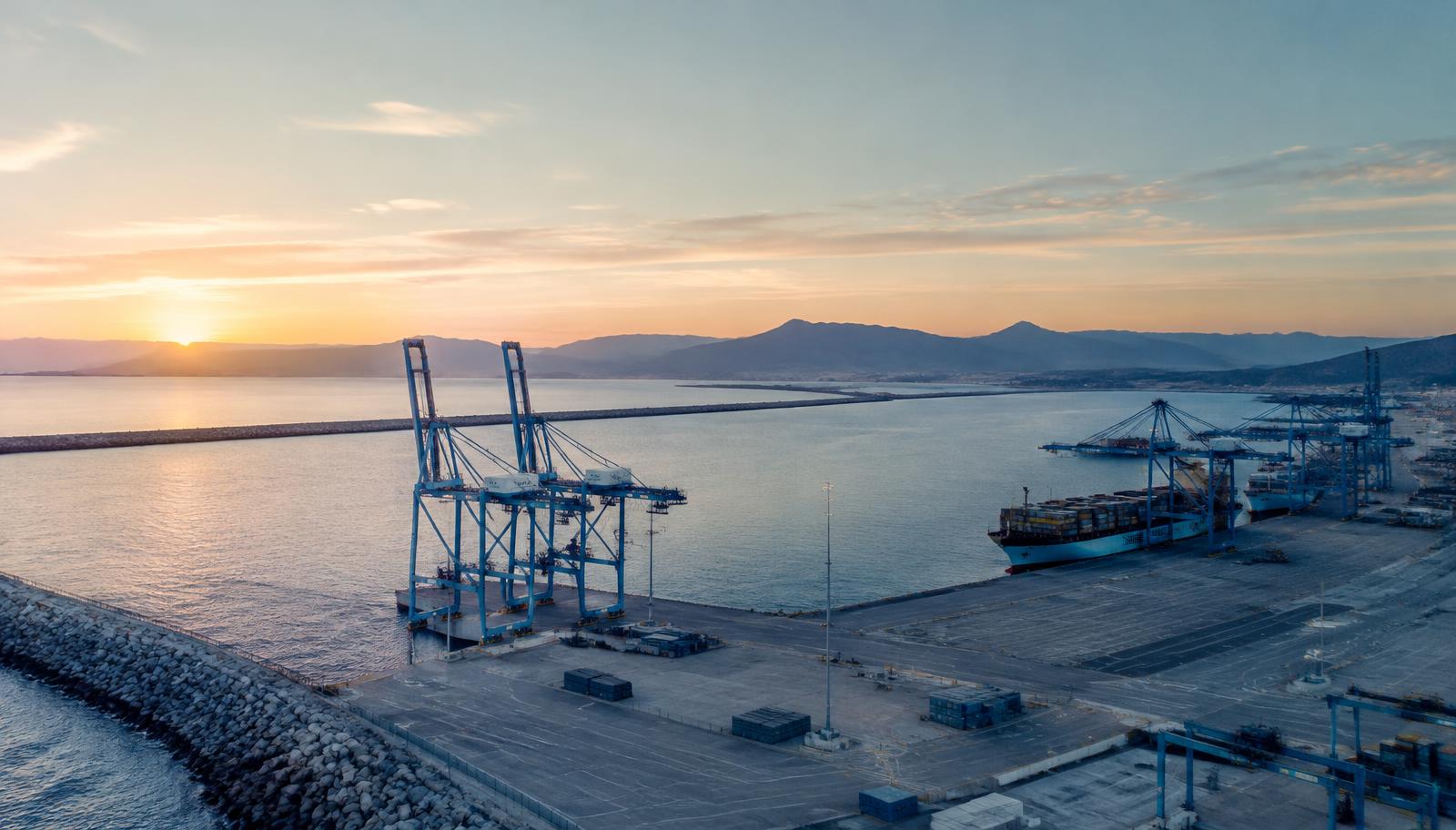
North Africa
A gas-short economy building the pipes and ports to become Africa's Atlantic gateway. Upstream is small and early; the near-term opportunity is pipelines, ports and the blue economy.
On-the-ground partner · working with our Cape Town and Stavanger offices
Saga's position in this market
Saga works in Morocco through an on-the-ground partner, coordinated from Cape Town and Stavanger.
Sector deep dives — Morocco
Morocco has 38.4 million people and a GDP of roughly $182 billion in 2025. Domestic hydrocarbon output is small, and the country buys LNG that reaches it through Spain. ONHYM — the National Office of Hydrocarbons and Mines — holds the state's upstream interests, licenses acreage and co-leads the Nigeria–Morocco gas pipeline.
Morocco's gas arrives as LNG regasified in Spain and sent south through the Maghreb–Europe pipeline: 886 million cubic metres in 2024. A 5 bcm a year LNG terminal at Nador West Med was put out to tender, but the tender was suspended in January 2026. Onshore, Tendrara's Phase 1 micro-LNG scheme is sized at 10 million cubic feet a day; Sound Energy sold its last 20 percent to Managem in August 2026. Offshore, Chariot has cut Anchois to a two-well first phase and is looking for partners. The 6,900 km African Atlantic Gas Pipeline, led by ONHYM and NNPC, got its ECOWAS intergovernmental agreement in July 2026. FEED is complete; FID and financing are still outstanding.
Morocco has more than 3,500 km of coastline and is Africa's second-largest fish supplier after Egypt. Coastal and artisanal landings were 1.13 million tonnes in 2025, worth MAD 10.1 billion — down 15 percent as pelagic catches fell. Aquaculture is tiny: around 2,300 tonnes in 2022. Ports are expanding fast. Nador West Med opened its first container terminal in September 2026, and Dakhla Atlantic passed 74 percent completion.
In May 2026 Norway and Morocco signed an Article 6.2 carbon-market agreement to support around 2 GW of renewables and storage over 2026–2036. In aquaculture, the Moroccan-Norwegian company Alta Mar has announced a US$21 million marine fish-farming project in Safi. The Norwegian opening is technology supply rather than operatorship.
Morocco is a midstream and maritime market, not a brownfield one. The live plays are pipeline and landfall engineering for the Atlantic pipeline and domestic gas grid, subsea work for Anchois, and port-side and aquaculture technology. ONHYM controls access to all three. Upstream well technology is a second-tier, opportunistic play while Chariot and Tendrara look for partners.
Saga connects Norwegian and Nordic technology and service providers with operators, state agencies and project developers, working in French and through local partners. Saga works with a local partner on the ground in Morocco. We are building our presence in Morocco and provide market entry, commercial representation and technical due diligence.
Field intelligence · Morocco
9 Nov 2026 · Morocco · LNG
Read the analysis4 Nov 2026 · Morocco
Read the analysis4 Nov 2026 · Morocco
Read the analysis7 Sep 2026 · Morocco
Read the analysisWorking on a project in Morocco? We deliver Norwegian technology there with our partner on the ground.
Talk to a partnerRelated markets — North Africa
Continue across the geography
Start with a screening
Have a candidate well, asset or project in Morocco? Send it to us and we will return a written screening within ten working days.