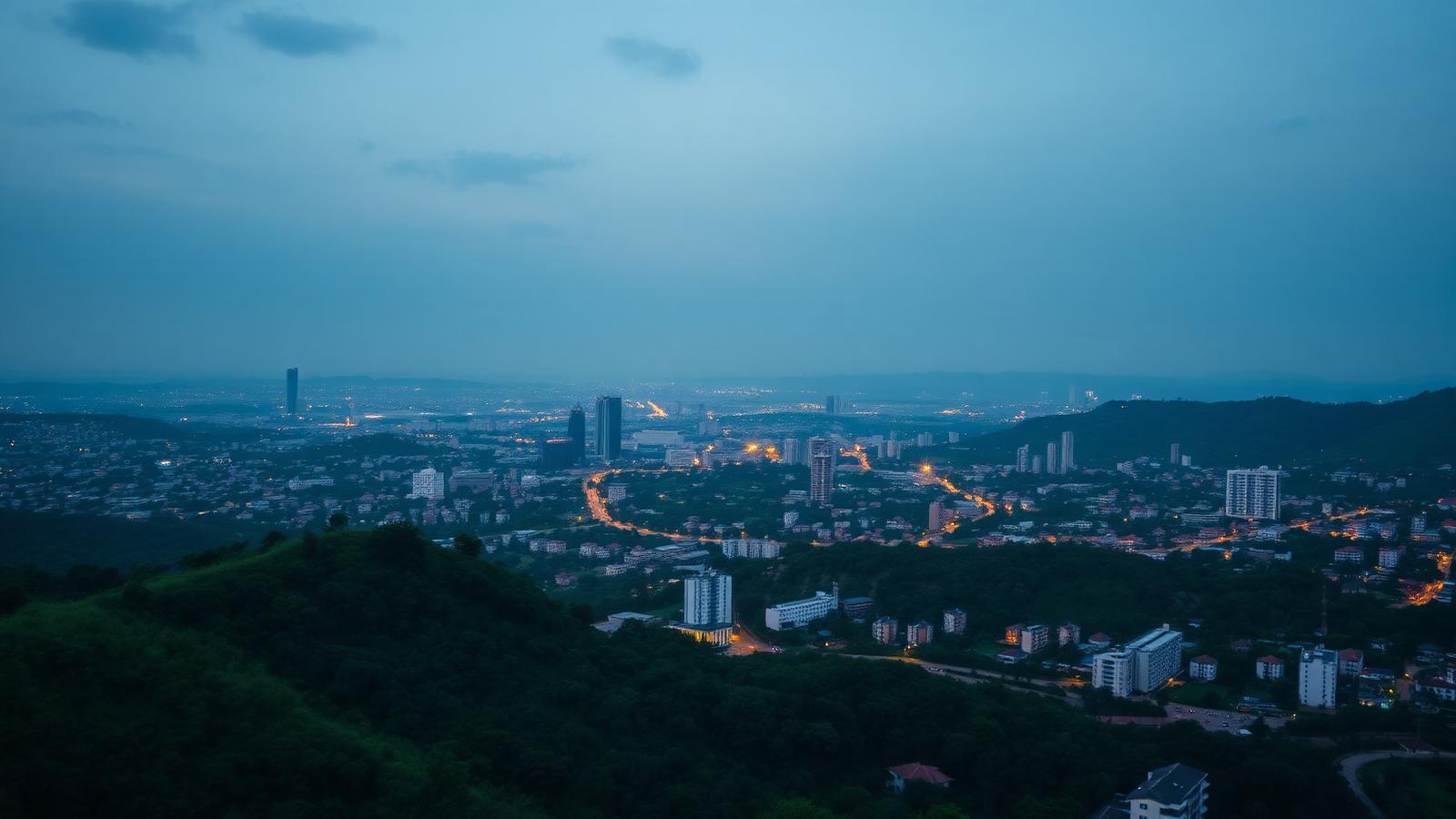
East Africa
Rwanda.
East Africa's most-disciplined small economy and the regional convening capital. Kigali is the conference and financial-services hub of choice; Lake Kivu methane is a unique energy story. A services and blue-economy market, not upstream.
Desk coverage from Cape Town and Stavanger
Saga's position in this market
Saga covers Rwanda from Cape Town and Stavanger through our intelligence system, partner network and travelling principals.
Sector deep dives — Rwanda
The country today
Rwanda has a population of around 14 million and a state that runs unusually well by regional standards. Kigali International Financial Centre has positioned the city as a credible holding-company and fund-domicile location for sub-Saharan operations; the visa regime, the convention infrastructure and the security environment have made Kigali the default convening capital for Pan-African business events. The Kagame government's developmental-state model is well-documented; the political constraints are equally well-documented. The eastern DRC conflict and Rwanda's role in it remain the most significant external relations file.
For a Norwegian principal, Rwanda is a services, financial-infrastructure and blue-economy market. There is no upstream oil-and-gas story beyond Lake Kivu methane.
Energy — Lake Kivu and the power sector
Lake Kivu holds an unusual concentration of dissolved methane and carbon dioxide at depth — one of only three such "exploding lakes" in the world. The KivuWatt project, operated by ContourGlobal (now part of KKR), extracts methane from the lake and uses it for power generation, delivering capacity to the Rwandan grid. Symbion Power and Shema Power Lake Kivu have advanced additional methane-to-power concepts. The technical play is unusual: gas extraction from a stratified lake, gas-water separation and degassing, and power generation from a moderate-quality fuel gas. The environmental case is also unusual: controlled methane extraction reduces the long-run risk of catastrophic limnic eruption.
Beyond Kivu, Rwanda's power sector is hydro-dominated with growing solar and an ambition to expand grid access materially. The country imports refined product; there is no domestic upstream activity.
Financial services and convening infrastructure
Kigali International Financial Centre, established under a 2020 law, offers a tax and regulatory framework explicitly designed to attract holding companies, fund administrators and Pan-African corporate vehicles. The Rwanda Finance Limited team has been disciplined in marketing; several global names have established Pan-African platforms there. For a Norwegian principal, KIFC is a credible domicile option for an Africa platform vehicle.
Kigali hosts the Africa CEO Forum, the African Development Bank annual meetings on a rotating basis, the AfCFTA secretariat in a coordination role, and a high frequency of sector-specific Pan-African events. For Saga and for Saga's principals, Kigali is a calendar city.
The blue economy
Rwanda is landlocked; Lake Kivu and the smaller lakes support an inland fishery dominated by sambaza (a small endemic species) and tilapia. Aquaculture is growing from a small base, with cage culture on Lake Kivu and pond culture inland. The sector is interesting for a focused Norwegian principal on hatchery genetics, feed and cold-chain work, but the addressable market is small.
The Norwegian–Rwandan corridor
Norway does not maintain a resident embassy in Kigali; diplomatic affairs are handled by the Norwegian embassy in Kampala (Uganda), with an honorary consulate in Kigali. Yara has regional fertiliser distribution and the Yara-Rwanda partnership on fertiliser blending is one of the more substantive Norwegian commercial engagements in the country. Innovation Norway and NABA programming covers Kigali through East African regional initiatives.
What Saga sees
Rwanda is a services market for Saga, not an upstream market. Three live themes. First, Pan-African platform domicile and corporate-structuring work through KIFC for Norwegian principals building Africa-wide vehicles. Second, selective work on Lake Kivu methane-to-power, where the technology stack is unusual and Nordic deepwater and gas-handling expertise has a credible angle. Third, aquaculture hatchery and feed cooperation on Lake Kivu, in coordination with the broader Norwegian fisheries-development network in East Africa.
The DRC conflict is the principal risk variable; sanctions or financing restrictions tied to the M23 file are a tail risk that affects platform-domicile decisions in particular.
How we work in Rwanda
Saga does not maintain a permanent office or partner in Rwanda. We work the market on a case-by-case basis, coordinated from Cape Town, with introductions through the Norwegian embassy in Kampala, the honorary consulate in Kigali, Yara's regional team and the KIFC corporate-services ecosystem.
At a glance
- Population: ~14 million
- Hydrocarbons: No upstream oil; Lake Kivu methane is the unique energy story
- Principal NOC: No national oil company
- Norwegian footprint: No resident embassy (accredited from Kampala) · honorary consulate Kigali · Yara fertiliser blending partnership
- Saga focus areas: KIFC platform-domicile structuring · Lake Kivu methane-to-power · Aquaculture hatchery and feed on Lake Kivu · Kigali as convening calendar
Live intelligence — Rwanda
Track deals, operator moves and regulatory signals for Rwanda on Saga's intelligence platform.
Related markets — East Africa
Continue across the geography
← Previous · East Africa
Kenya
East Africa's fintech and blue-economy capital. Konza Technopolis, M-Pesa's data infrastructure, Mombasa port modernisation and a serious posture on fisheries surveillance make this a different shape of Saga play — and an important one.
Next · North Africa →
Egypt
Africa's largest energy market and the home of our most cited brownfield reference. Western Desert tight-carbonate work is live; Cairo is the right place to start a Mediterranean-and-Africa BD calendar.
Start with a screening
Have a candidate well, asset or project in Rwanda? Send it to us and we will return a written screening within ten working days.