West Africa
Benin.
A small, stable francophone market whose strategic value is its port. Cotonou serves landlocked Niger and northern Nigeria; Glo-Djigbé is the most credible industrial platform in the region. Trade and logistics, not upstream.
Desk coverage from Cape Town and Stavanger
Saga's position in this market
Saga covers Benin from Cape Town and Stavanger through our intelligence system, partner network and travelling principals.
Sector deep dives — Benin
The country today
Benin has a population of around 14 million and one of the more disciplined macroeconomic records in the region. The Talon government has pushed structural reform — port concession, industrial zone, customs modernisation, and a credible programme on cashew and cotton value-chain upgrading. The country runs a meaningful current-account surplus in the years Cotonou's transit trade with Niger and Nigeria functions normally; the Niger border situation since 2023 has been the principal external shock.
For a Norwegian principal, Benin is not an upstream story. It is a port, logistics and agribusiness story, with a small but credible aquaculture angle on the coastal lagoons.
Energy — oil and gas
Benin has modest hydrocarbon potential and no producing fields. The offshore Sèmè field, originally developed by Saga Petroleum in the 1980s, has been long abandoned. Licensing activity has been sporadic; no major operator currently holds a producing licence. The country imports refined product, predominantly through Cotonou, with a significant informal cross-border trade in subsidised Nigerian fuel that has historically distorted the domestic market.
The power sector is dependent on imports from Nigeria's TCN and on West African Power Pool flows; domestic generation is modest. Solar IPP development is the most credible energy-investment thesis but sits well outside Saga's mandate.
Trade, ports and the industrial zone
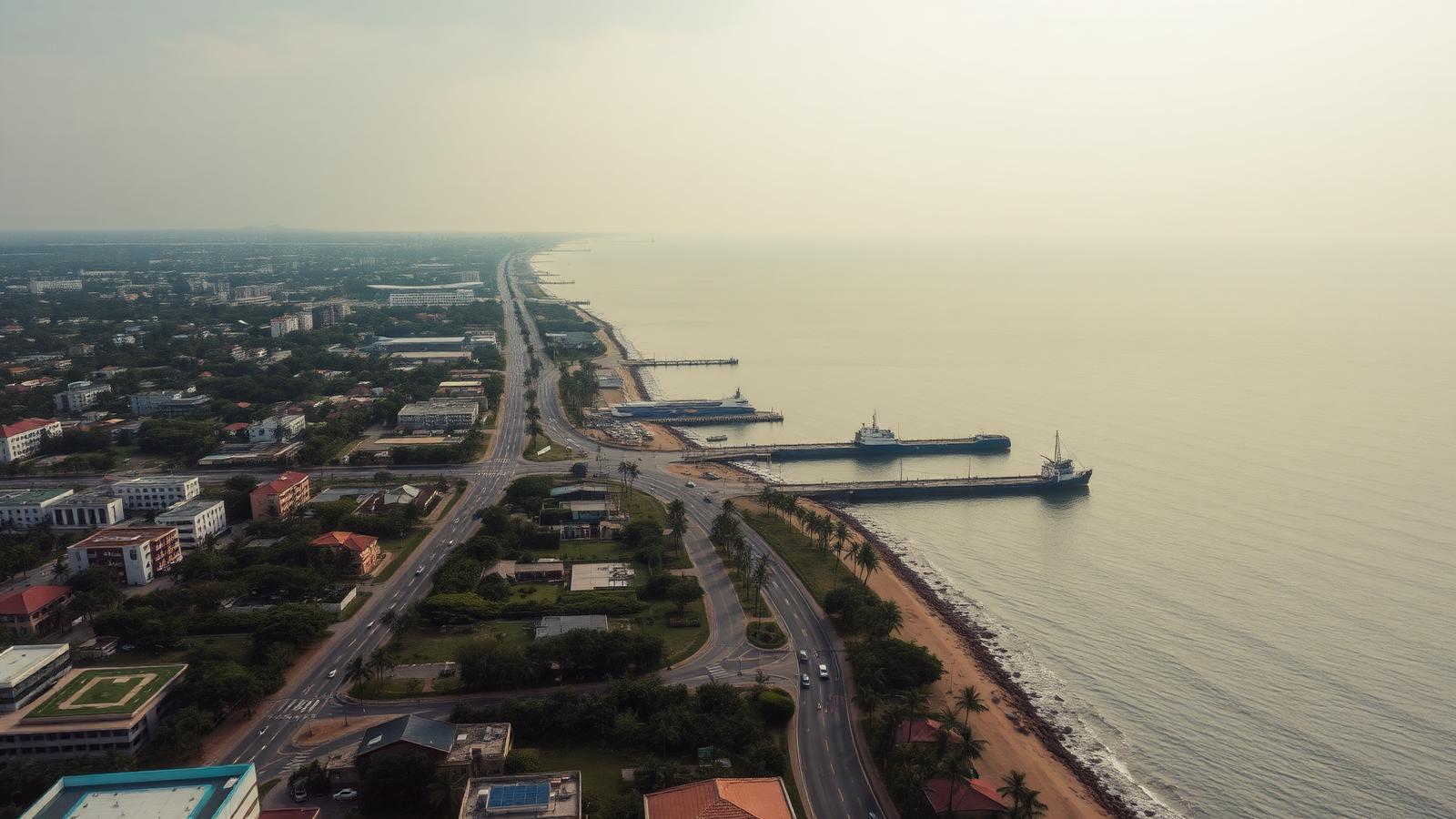
The Port of Cotonou is the country's central commercial asset. It handles container, breakbulk and roll-on/roll-off cargo and is the principal Atlantic gateway for landlocked Niger and parts of Burkina Faso and northern Nigeria. The port operator and the customs administration have run a multi-year digitisation programme; transit times have improved meaningfully from the early-2020s baseline. The Niger crisis interrupted northbound transit volumes; partial normalisation has begun but the channel remains politically sensitive.
The Glo-Djigbé Industrial Zone (GDIZ), a joint venture between the Beninese state and Arise IIP, is the most ambitious industrial-platform play in francophone West Africa. The zone targets cotton-to-textile, cashew-to-kernel and pineapple-to-juice value chains, with logistics integration to Cotonou port. For a Norwegian principal in agri-processing equipment, port-logistics technology or industrial-zone services, GDIZ is the live conversation.
The blue economy
Benin's coastline is short but the coastal lagoon system supports artisanal fisheries and a nascent aquaculture sector centred on tilapia and African catfish. Norwegian fisheries-development cooperation has had a limited but constructive engagement on hatchery and small-scale aquaculture pilots through regional programmes.
The Norwegian–Beninese corridor
Norway does not maintain a resident embassy in Cotonou; diplomatic affairs are handled by the Norwegian embassy in Abuja, with an honorary consulate in Cotonou. Yara is present through regional fertiliser distribution into cotton and food-crop value chains. The wider Nordic commercial footprint is light; the AfDB and the EU's Global Gateway programming are the practical co-investor channels.
What Saga sees
The realistic Saga play in Benin runs through trade, logistics and industrial-platform work, not upstream. Three live themes are worth attention: agri-processing equipment and operational know-how for GDIZ tenants, port-logistics and customs-digitisation technology for Cotonou, and selective aquaculture and hatchery cooperation on the lagoon system. None of these are megaproject opportunities; all are credible recurring-revenue plays for a focused principal.
How we work in Benin
Saga does not maintain a permanent office or partner in Benin. We work the market on a case-by-case basis, coordinated from Cape Town, with introductions through the Norwegian embassy in Abuja, the honorary consulate in Cotonou and the AfDB network in Abidjan.
At a glance
- Population: ~14 million
- Hydrocarbons: No active production; modest historical activity
- Principal NOC: No active national oil company in production
- Norwegian footprint: No resident embassy (accredited from Abuja) · honorary consulate Cotonou · Yara fertiliser distribution
- Saga focus areas: Glo-Djigbé Industrial Zone agri-processing · Cotonou port digitisation · Lagoon aquaculture pilots
Live intelligence — Benin
Track deals, operator moves and regulatory signals for Benin on Saga's intelligence platform.
Related markets — West Africa
Continue across the geography
← Previous · West Africa
Ghana
Tullow's Jubilee and TEN are the live conversations on well-life extension and cost discipline. Aker Energy's portfolio and the Pecan field add a second axis. A clean path through Accra for a focused completion or subsea play.
Next · Southern Africa →
Botswana
The most disciplined macro economy on the continent. Energy is small; the play is coal-bed methane, mining-grid renewables and the Debswana relationship. Gaborone is a calm Southern African base.
Start with a screening
Have a candidate well, asset or project in Benin? Send it to us and we will return a written screening within ten working days.