Southern Africa
Botswana.
The most disciplined macro economy on the continent. Energy is small; the play is coal-bed methane, mining-grid renewables and the Debswana relationship. Gaborone is a calm Southern African base.
Desk coverage from Cape Town and Stavanger
Saga's position in this market
Saga covers Botswana from Cape Town and Stavanger through our intelligence system, partner network and travelling principals.
Sector deep dives — Botswana
The country today
Botswana has a population of around 2.6 million and one of the longest unbroken records of democratic governance and prudent macro management in Africa. Diamonds dominate the export account through the Debswana joint venture between De Beers and the government, with Jwaneng and Orapa as the anchor mines. The 2024 election produced a peaceful change of government to the Umbrella for Democratic Change under President Boko, with continuity on the macroeconomic framework. The pula is one of the more stable currencies on the continent; sovereign debt is modest.
For a Norwegian principal, Botswana is not an oil-and-gas market. It is a mining, mining-services, coal-bed methane and mining-grid renewables market, with a useful Southern African convening function out of Gaborone.
Energy — coal-bed methane and mining-grid renewables
Botswana sits on substantial coal resources and a credible coal-bed methane (CBM) resource base, principally in the Karoo basin. Tlou Energy is the longest-running CBM developer, with the Lesedi project advancing toward small-scale gas-to-power. Strata Resources and others have pursued adjacent licences. The play is technically interesting — dewatering, completion design and surface-handling for a low-pressure unconventional gas — and the addressable market is modest but real for a specialty completion principal.
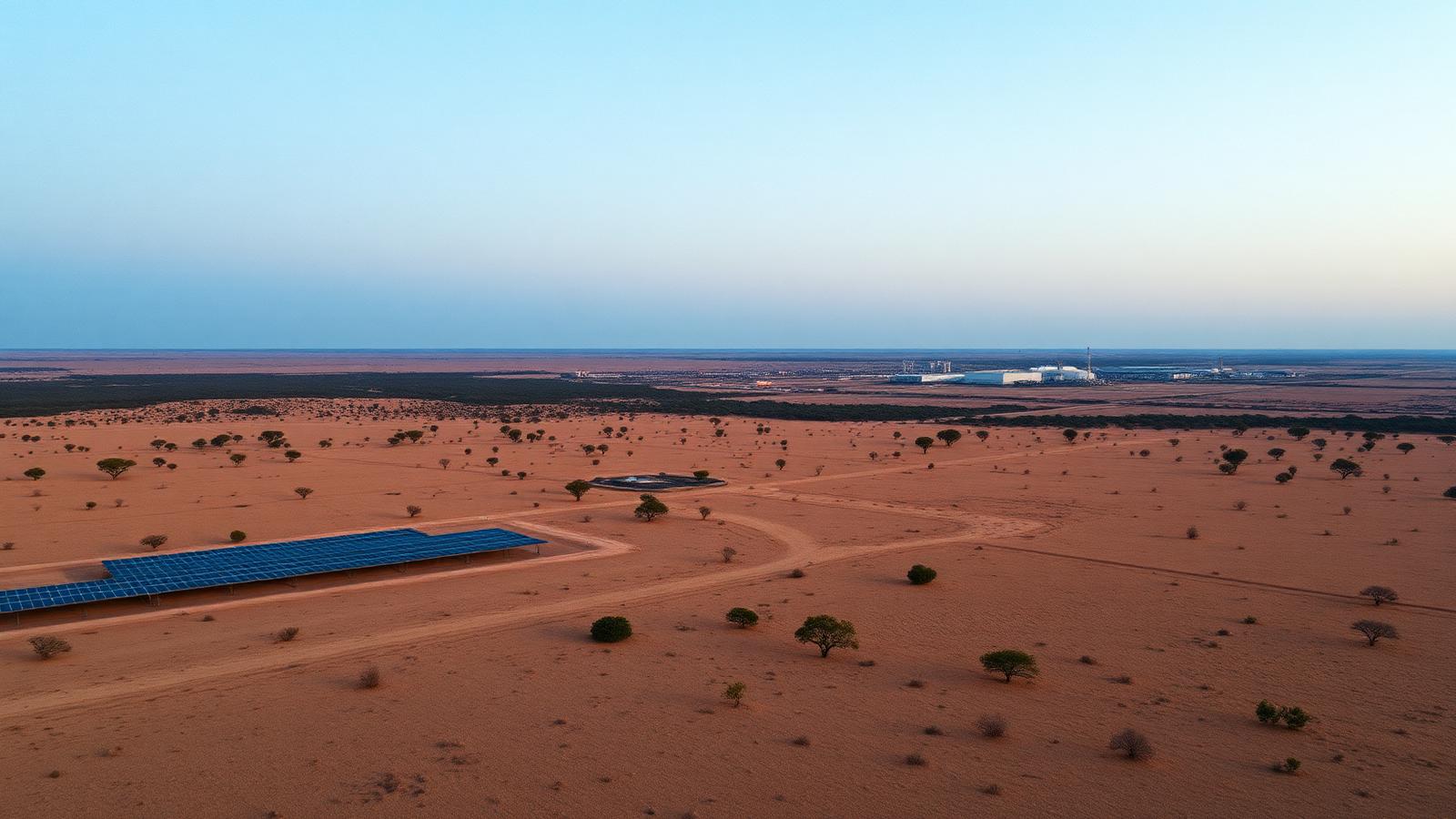
Beyond CBM, the dominant energy story is mining-grid renewables. Debswana, Khoemacau (copper), and Cupric Canyon are the anchor offtakers for utility-scale solar and storage projects designed to displace diesel and coal-fired generation on mining sites. The Ministry of Minerals and Energy has run procurement rounds for grid-connected solar at the 100–200 MW scale; several have closed.
Mining and mining services
Diamonds remain the export anchor through Debswana (Jwaneng, Orapa, Letlhakane, Damtshaa) and the Lucara-operated Karowe mine. Copper has emerged as the second axis with Khoemacau's Zone 5 expansion and the Cupric Canyon Khoemacau adjacency, plus MMG's Karowe acquisition. The De Beers sales relationship with the Botswana state was renegotiated in 2023 with a higher state share of run-of-mine production routed through the Okavango Diamond Company; the relationship is the most consequential single commercial file in the country.
For a Norwegian principal in mining services — water-treatment technology, electrification of mining fleets, process-control and digital-mining work — Debswana, Khoemacau and the procurement teams at the Lucara/MMG operations are the live conversation. Mining-grid renewables and behind-the-meter storage are a Norfund and Scatec-adjacent thesis with a clean fit.
The blue economy
Botswana is landlocked. The Okavango Delta is a Ramsar wetland and a tourism asset, not a fisheries economy of any commercial scale.
The Norwegian–Botswanan corridor
Norway does not maintain a resident embassy in Gaborone; diplomatic affairs are handled by the Norwegian embassy in Pretoria, with an honorary consulate in Gaborone. The Norwegian-Botswana relationship is most active through the Norfund-anchored renewables portfolio and the wider Southern African mining-services ecosystem coordinated out of Johannesburg and Cape Town. Yara has a regional fertiliser presence. Scatec's solar projects in Southern Africa connect into the Botswana procurement context.
What Saga sees
Botswana is a small market with a clean read. Three live themes for a Norwegian principal. First, CBM completion and surface-handling technology with Tlou and adjacent licensees, where Norwegian unconventional-gas know-how has a credible niche. Second, mining-services and mining-grid renewables work with Debswana, Khoemacau and the Lucara/MMG operations — water, electrification, storage and digital mining. Third, Gaborone as a calm, low-friction Southern African base for principals who do not want to run a Johannesburg or Cape Town footprint.
The principal risk is single-commodity dependence on diamonds and the long-cycle dynamics of the lab-grown diamond market on natural-stone demand. The macro framework continues to be the regional benchmark.
How we work in Botswana
Saga does not maintain a permanent office or partner in Botswana. We work the market on a case-by-case basis, coordinated from our Cape Town office, with introductions through the Norwegian embassy in Pretoria, the honorary consulate in Gaborone, the Norfund and Scatec Southern African networks and the Debswana and Khoemacau procurement teams.
At a glance
- Population: ~2.6 million
- Hydrocarbons: No oil production; coal-bed methane is the active play
- Principal NOC: No national oil company
- Norwegian footprint: No resident embassy (accredited from Pretoria) · honorary consulate Gaborone · Norfund and Scatec renewables exposure
- Saga focus areas: Coal-bed methane completions · Mining-grid renewables and storage · Mining-services and water technology · Gaborone as Southern African convening base
Live intelligence — Botswana
Track deals, operator moves and regulatory signals for Botswana on Saga's intelligence platform.
Related markets — Southern Africa
Continue across the geography
← Previous · West Africa
Benin
A small, stable francophone market whose strategic value is its port. Cotonou serves landlocked Niger and northern Nigeria; Glo-Djigbé is the most credible industrial platform in the region. Trade and logistics, not upstream.
Next · East Africa →
Tanzania
Equinor's long operator history with TPDC is the spine of the country's gas story. The Lindi/Mtwara appraisal programme is the most coherent pre-development opportunity in East Africa, with layered Nordic warm-intro paths.
Start with a screening
Have a candidate well, asset or project in Botswana? Send it to us and we will return a written screening within ten working days.