Central Africa
Gabon.
A mature deepwater and shelf oil province in managed decline. Perenco, Assala, TotalEnergies and BW Energy define the operator stack. Brownfield well-life extension is the dominant technical theme.
On-the-ground partner · working with our Cape Town and Stavanger offices
Saga's position in this market
Saga works in Gabon through an on-the-ground partner, coordinated from Cape Town and Stavanger.
Sector deep dives — Gabon
The country today
Gabon has a population of around 2.4 million and an economy that remains heavily oil-dependent despite two decades of attempted diversification. The 2023 military transition ended the Bongo dynasty; the transitional government has pursued a constitutional process and the 2025 election restored civilian rule under President Oligui Nguema. Macro management has been steadier than the political transition suggested it might be, with the CFA peg providing a baseline of currency stability.
For a Norwegian principal, Gabon is a classic mature-shelf brownfield story with a deepwater overlay. Operators are technology-receptive; the addressable spend on well-life extension, water-shutoff and artificial lift is substantial; the regulatory environment is workable.
Energy — oil and gas
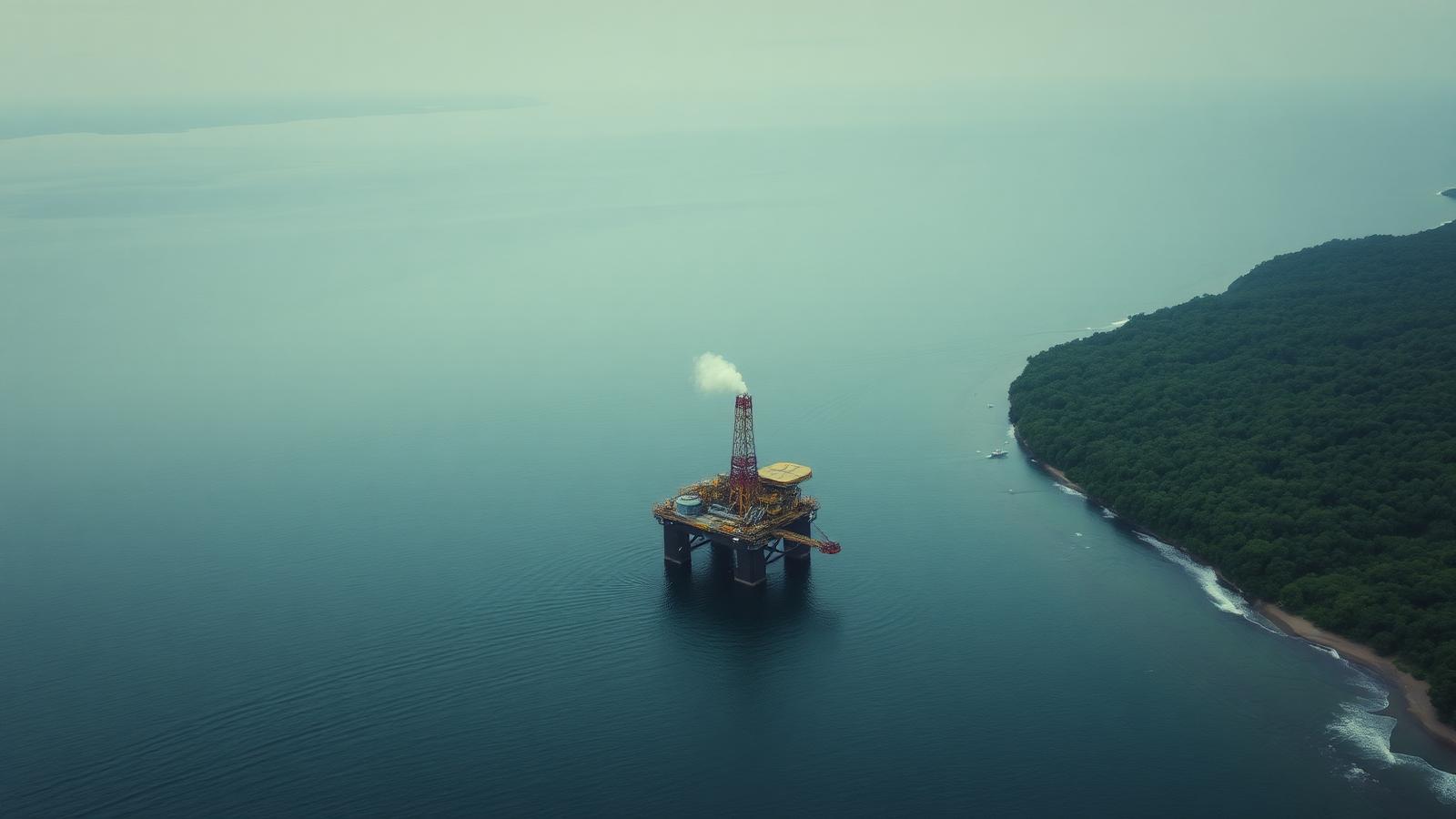
Gabon produces roughly 200,000 barrels per day from a portfolio of mature onshore, shelf and deepwater fields. The operator stack is unusually clear. Perenco is the largest producer, with the Rabi-Kounga, Olowi and Cap Lopez cluster; Assala Energy (Carlyle, with reported divestment processes ongoing) operates the former Shell portfolio; TotalEnergies retains the Anguille redevelopment and other interests; BW Energy operates the Dussafu and Hibiscus/Ruche developments offshore; Vaalco operates Etame. GOC (Gabon Oil Company) holds participating interests and has expanded its operating role.
The 2019 hydrocarbon code restored a more competitive licensing framework after the more onerous 2014 regime. The transitional government has indicated continuity on commercial terms and is rerunning targeted licensing rounds. The deepwater pre-salt play, validated by BW's Hibiscus/Ruche successes, has reopened exploration interest.
For a completion-technology principal the addressable spend is concentrated in three places. Perenco's portfolio is the largest and most active; water-shutoff, artificial-lift optimisation and ESP reliability are the dominant pain points on Rabi-Kounga and the Cap Lopez cluster. Assala's mature shelf assets are similar. BW's Dussafu and Hibiscus/Ruche subsea developments generate a steady spend on completion and intervention work. Operators in Gabon have historically been more open to specialty foreign vendors than the West African super-major-operated assets.
The blue economy
Gabon has 800 kilometres of Atlantic coastline and a large EEZ. Industrial tuna and shrimp fisheries are concentrated at Port-Gentil and Owendo; artisanal fisheries are a meaningful coastal-livelihood sector but a small contributor to the national economy relative to oil. The country has been an early African mover on marine protected areas, with a substantial share of the EEZ under some form of conservation designation, and on satellite-based IUU monitoring.
Aquaculture is nascent. Norwegian fisheries-development cooperation has had limited direct engagement; the closer parallels are with Senegal and Ghana on hatchery and small-scale tilapia work.
The Norwegian–Gabonese corridor
Norway does not maintain a resident embassy in Libreville; diplomatic affairs are handled by the Norwegian embassy in Luanda, with an honorary consulate in Libreville. There is no Equinor operating footprint in Gabon. Yara has a regional fertiliser presence. The relevant Nordic-adjacent network runs through Perenco's Paris and London teams, BW's Oslo and Singapore offices, and the wider AfDB and IFC ecosystems.
What Saga sees
Gabon is one of the cleaner brownfield completion-technology opportunities in the region. Three plays are worth a Saga conversation. First, water-shutoff and artificial-lift optimisation on Perenco's Rabi-Kounga and Cap Lopez cluster, where the addressable spend is recurring and operator appetite for foreign specialty vendors is genuine. Second, completion and intervention work on BW's Dussafu and Hibiscus/Ruche subsea developments, where the Nordic operator relationship is a natural fit. Third, selective work on Assala's portfolio, with the divestment process as the variable that determines who the buyer is in 24 months.
The political-transition risk has receded with the 2025 election but has not gone away; we treat Gabon as a market where operator relationships matter more than government relationships.
How we work in Gabon
Saga does not maintain a permanent office or partner in Gabon. We work the market on a case-by-case basis, coordinated from Cape Town, with introductions through Perenco's and BW's industry networks, through the Norwegian embassy in Luanda and through the honorary consulate in Libreville.
At a glance
- Population: ~2.4 million
- Hydrocarbons: Oil; mature shelf and onshore portfolio plus active deepwater pre-salt
- Principal NOC: GOC (Gabon Oil Company)
- Norwegian footprint: No resident embassy (accredited from Luanda) · honorary consulate Libreville · BW Energy operator footprint
- Saga focus areas: Perenco brownfield water-shutoff and artificial lift · BW Dussafu and Hibiscus/Ruche completions · Assala portfolio transition
Live intelligence — Gabon
Track deals, operator moves and regulatory signals for Gabon on Saga's intelligence platform.
Related markets — Central Africa
Continue across the geography
← Previous · Central Africa
Equatorial Guinea
Equatorial Guinea is covered by Saga's Central Africa partner, working with our Cape Town and Stavanger offices. Contact us for a briefing on current operator activity and local-content requirements.
Next · West Africa →
Senegal
The strongest Norwegian corridor in West Africa. Long-standing Nordic bilateral programmes have built a relationship few competitors can match. Sangomar Phase 2 sits inside our energy thesis; we tell new principals to start here.
Start with a screening
Have a candidate well, asset or project in Gabon? Send it to us and we will return a written screening within ten working days.